
 EN
EN
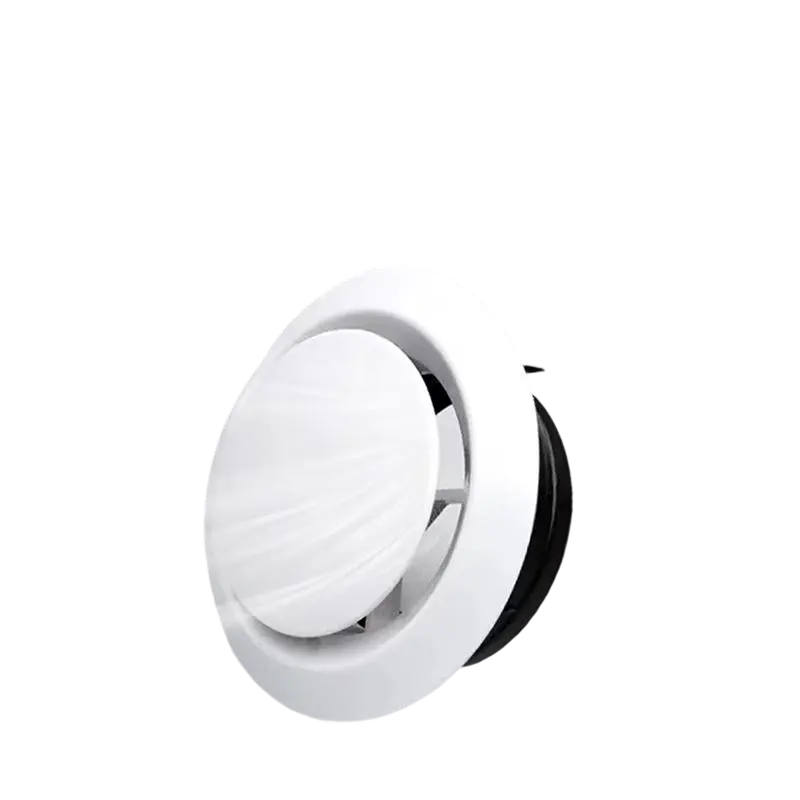
Why Large Spaces Demand Specialized Commercial HVAC Diffusers
Physics of Long-Throw Air Distribution: Velocity, Angle, and the Coanda Effect
When dealing with big open areas, regular air distribution just doesn't cut it anymore because of some basic physics problems most standard diffusers can't handle. Take the Coanda effect for instance. This is when fast moving air sticks to ceiling surfaces, allowing special diffusers to send air across distances from about 20 to even 100 feet without the air column sagging down too soon. Getting the angle right matters a lot too. Angles between around 15 degrees to 45 degrees help keep the air moving strong while not pulling in too much of that stale air sitting around. This actually helps fight against temperature layers forming in places with high ceilings such as big warehouses or those fancy atriums we see sometimes. Regular office diffusers simply don't have the right shape or design to maintain airflow over long distances or create smooth laminar flow patterns. Instead they tend to make weak air streams that fall apart pretty quickly, usually losing effectiveness after just about 15 feet or so.
Key Differences Between Large-Space and Standard Office Ventilation Requirements
Commercial HVAC diffusers for expansive areas differ fundamentally from office systems across three critical dimensions:
| Requirement | Large Spaces | Standard Offices |
|---|---|---|
| Air Volume | 4–10 times higher CFM | Low-to-moderate CFM |
| Throw Distance | 50+ feet | <15 feet |
| Occupancy Density | Highly variable (0–5 people/m²) | Consistent (~1 person/10 m²) |
These disparities necessitate diffusers designed for high-velocity, laminar, long-throw delivery—not low-velocity mixing. Without such specialization, large spaces suffer from localized drafts near diffusers and dead zones at distance. Energy waste climbs 30–40% as systems overcompensate for uneven distribution, per ASHRAE-referenced airflow studies.
Top Commercial HVAC Diffuser Types for High-Ceiling & Open-Area Applications
Selecting optimal commercial HVAC diffusers for large spaces requires matching unit performance to specific architectural and operational demands—not repurposing office-grade hardware.
4-Cone Jet Diffusers: Optimal Mixing and Throw Control in Atriums and Warehouses
The four-cone jet diffuser creates powerful air streams through its cone-shaped nozzles, which helps mix air quickly throughout large spaces. These units work best when installed in areas over 30 feet tall because they maintain their effectiveness across such heights. They can push air as far as 65 feet away from the wall thanks to something called the Coanda effect that makes the air stick to ceiling surfaces instead of dropping straight down. This matters a lot in cold storage facilities where temperature differences between floor and ceiling levels might reach 15 degrees Fahrenheit or more. The special design ensures even heating throughout these massive spaces, working well even if mounted as high as 45 feet above ground level. That's why many HVAC professionals choose these diffusers whenever maintaining comfortable temperatures without drafts becomes absolutely essential for proper operation.
Linear Slot vs. Perforated Face vs. Vortex Diffusers: Performance Trade-Offs for Malls and Airports
Three dominant designs serve vast public spaces with distinct priorities:
| Diffuser Type | Best For | Trade-Off |
|---|---|---|
| Linear slot | Mall corridors | Limited throw flexibility |
| Perforated face | Airport lounges | Lower velocity range |
| Vortex | Terminal mixing zones | Higher noise at max flow |
Linear slot vents create that nice wall-following airflow pattern which works great in retail spaces where people walk along walls, though they need pretty precise placement between them to make sure there are no dead spots. Perforated face diffusers spread air all around the room making them good choices for places like lounges where drafts might be uncomfortable, but these tend to struggle when installed above ceilings higher than about 20 feet since the air loses its punch as it travels down. Vortex type systems mix air quickly in busy areas through spinning motion, but watch out because noise levels can creep past 45 decibels during busy times. For gates with ceilings under 50 feet, combining different types usually gives the best results balancing quiet operation below 40 dB while still getting adequate air movement across the space.
Designing Effective Air Distribution Systems with Commercial HVAC Diffusers
Zoning, Throw Distance Calibration, and Pressure Balancing for Complex Spaces
Getting good air flow right in big commercial spaces really depends on putting together three main things: smart zoning strategies, proper throw distance calculations, and careful pressure balancing throughout the system. When we talk about zoning, what we're basically doing is dividing up different parts of a building based on how much heat they generate and who actually uses those areas. For instance, separating busy retail sections from storage rooms where not much happens makes sense because each needs completely different airflow management. Throw distance matters too. We need to pick the right diffusers and place them correctly according to ceiling heights and how far the air needs to reach. If we guess wrong here, people might feel cold drafts near HVAC units or find certain spots in the building just don't get enough fresh air. Pressure balancing across all duct branches should stay within about 10% variation. Otherwise, some areas end up starving for air while others get too much, plus fans work harder and make more noise than necessary. According to recent ASHRAE standards, when systems aren't balanced properly, energy bills can jump anywhere between 15 to 20 percent because fans have to compensate for imbalances. These techniques help eliminate temperature layers in the air and actually work well even in challenging environments like massive airport terminals, grand atrium spaces, and sprawling warehouse complexes where traditional approaches often fall short.
Avoiding Common Pitfalls: Drafts, Stratification, and Under-Delivery in Large-Space Installations
Drafts, thermal stratification, and poor temperature delivery don't have to happen in big space HVAC systems. They usually point to equipment that's just not right for the job or designs that miss important details. Cold spots and uncomfortable air movement often come from those industrial diffusers shooting air too fast straight at people working in places like warehouse loading areas or concert venues. Thermal stratification is when warm air gets stuck near the ceiling while cold stuff hangs around down low, wasting somewhere between 15% to 25% of heating costs according to recent industry benchmarks. When different parts of a building feel hot here and cold there, it typically traces back to ductwork that's too big, diffusers rated wrong for their throw distance, or pressure settings all over the map. The fix starts by picking diffusers with adjustable louvers so airflow can be directed properly. Checking pressure balance across the whole system during installation matters a lot too. And getting serious about CFD modeling needs to happen way before construction starts, not just as something to patch things up after problems appear. Getting these basics right saves money on fixes later and keeps everyone comfortable without breaking the bank on energy bills.
FAQ
Why are specialized commercial HVAC diffusers necessary for large spaces?
Specialized diffusers are important because they manage long-throw air distribution efficiently, reduce drafts, and enhance energy savings by providing even airflow in large spaces, unlike standard office diffusers.
What are the primary differences between large-space and standard office ventilation requirements?
The main differences include higher air volume, longer throw distances, and variable occupancy density in large spaces, requiring diffusers designed for high-velocity and laminar flow.
How do 4-cone jet diffusers work in atriums and warehouses?
4-cone jet diffusers use cone-shaped nozzles to create powerful air streams that can maintain their effectiveness over high ceilings, utilizing the Coanda effect to distribute air evenly.
What challenges might occur if HVAC systems are not properly designed for large spaces?
Improper designs can result in drafts, thermal stratification, and uneven temperature delivery, leading to discomfort and increased energy costs.
Table of Contents
- Why Large Spaces Demand Specialized Commercial HVAC Diffusers
- Top Commercial HVAC Diffuser Types for High-Ceiling & Open-Area Applications
- Designing Effective Air Distribution Systems with Commercial HVAC Diffusers
- Avoiding Common Pitfalls: Drafts, Stratification, and Under-Delivery in Large-Space Installations
-
FAQ
- Why are specialized commercial HVAC diffusers necessary for large spaces?
- What are the primary differences between large-space and standard office ventilation requirements?
- How do 4-cone jet diffusers work in atriums and warehouses?
- What challenges might occur if HVAC systems are not properly designed for large spaces?