
 EN
EN
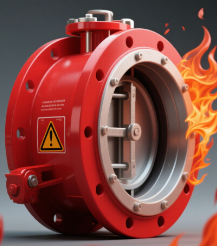
In the design and construction of modern buildings, safety has always been a core priority, and fire protection systems are an indispensable part of ensuring building safety. Among various fire protection components, fire dampers play a crucial role as a key barrier against fire and smoke spread. Whether it is commercial buildings with dense personnel flow, industrial facilities with complex operating environments, or residential projects pursuing comfortable living, the rational configuration and high-quality performance of fire dampers directly relate to the safety of lives and property. With the continuous improvement of global fire protection standards and the increasing emphasis on building safety, understanding the importance, functional characteristics, and selection criteria of fire dampers has become essential for architects, engineers, and project managers.
Core Functions and Working Principles of Fire Dampers
Fire dampers are specialized components installed in ventilation, air conditioning, and smoke exhaust systems. Their core function is to quickly close when a fire breaks out, blocking the spread of flames and smoke through air ducts, thereby limiting the scope of the fire and gaining valuable time for personnel evacuation and fire rescue. Unlike ordinary ventilation components, fire dampers are designed to withstand high temperatures and fire impacts. They usually rely on temperature-sensitive elements (such as fusible links) or electrical signals to trigger the closing mechanism. When the ambient temperature reaches the preset threshold (generally 70℃ for conventional scenarios), the fusible link melts, and the damper blade closes automatically under the action of a spring or other driving device, forming a sealed barrier in the air duct.
In addition to preventing the horizontal spread of fire through air ducts, high-quality fire dampers can also effectively reduce the spread of toxic smoke. Smoke inhalation is one of the main causes of casualties in fires, and fire dampers can block the circulation path of smoke, ensuring that evacuation routes and safe areas maintain relatively clean air, which is crucial for protecting the lives of trapped personnel.
Stringent Standards for Fire Dampers in Modern Construction
With the deepening of global fire protection management, countries and regions have formulated strict technical standards and certification requirements for fire dampers. Internationally recognized standards such as NFPA 90A (USA) and BS 9999 (UK) clearly specify the performance parameters, test methods, and installation requirements of fire dampers. In China, fire dampers must pass the qualification assessment of the Fire Product Qualification Assessment Center of the Emergency Management Department and obtain the CCCF certification to be put into the market. This series of standards and certifications ensures that fire dampers can perform their intended functions in critical moments.
For modern buildings, compliance with fire protection standards is not only a legal requirement but also a manifestation of social responsibility. Commercial buildings, industrial facilities, and large residential complexes often need to go through strict fire acceptance before they can be put into use, and the quality and installation compliance of fire dampers are important inspection items. Non-compliant fire dampers may not only lead to failure to pass the acceptance but also pose hidden dangers to building safety, which may result in catastrophic consequences in the event of a fire.
Key Characteristics of High-Quality Fire Dampers
The performance of fire dampers directly depends on their design, materials, and production technology. High-quality fire dampers should have the following core characteristics: First, excellent high-temperature resistance. They must maintain structural integrity and sealing performance in high-temperature environments to effectively block fire and smoke. Second, reliable opening and closing mechanisms. The closing action must be sensitive and accurate, without jamming or failure. Third, compatibility with the ventilation system. While ensuring fire protection performance, they should not excessively affect the normal operation of the ventilation system, such as air volume and noise.
To achieve these characteristics, manufacturers need strong technical strength and advanced production equipment. For example, enterprises with intelligent production workshops covering an area of over 30,000 square meters, more than 200 sets of professional production equipment, and 16 assembly lines can better control product quality through standardized production processes. In addition, a complete testing system, including advanced fan performance testing laboratories, is essential to verify the performance of each fire damper before leaving the factory, ensuring that it meets relevant standards and requirements.
Practical Application Cases and Safety Value
The practical application effect of fire dampers fully reflects their important value in building safety. In large-scale projects such as highway tunnels, commercial complexes, and industrial parks, fire dampers have become a key part of the fire protection system. For example, in the volcano tunnel project constructed by Sichuan Road and Bridge, the complex geological environment and long tunnel length put forward higher requirements for fire protection. The fire dampers used in the project can quickly close in case of fire, dividing the tunnel into independent safety zones, preventing the spread of fire and smoke, and providing a safe evacuation channel for personnel and rescue vehicles.
In commercial buildings with dense personnel, such as shopping malls and office buildings, the rational layout of fire dampers can effectively control the spread of fire between floors and regions. Data shows that high-quality fire dampers can reduce the spread speed of smoke by up to 80%, significantly improving the survival rate of trapped personnel. At the same time, they can also protect key equipment and property in the building, reducing economic losses caused by fire.
Critical Considerations for Selecting Compliant Fire Dampers
When selecting fire dampers for building projects, the following key factors need to be considered: First, certification compliance. Ensure that the selected products have relevant certifications such as CCCF, and meet the requirements of national and local fire protection standards. Second, product quality and performance. Understand the manufacturer's technical strength, production equipment, and testing capabilities, and select products with reliable quality and stable performance. Third, customized solutions. Different building types and ventilation systems have different requirements for fire dampers. Manufacturers with professional R&D teams and customized service capabilities can provide more suitable products according to specific project needs. Fourth, after-sales service. Perfect after-sales service, including installation guidance, maintenance, and technical support, is an important guarantee for the normal operation of fire dampers.
In addition, it is also necessary to pay attention to the compatibility between fire dampers and other fire protection components, such as smoke exhaust fans, fire valves, and mufflers, to ensure the coordinated operation of the entire fire protection system. At the same time, regular inspection and maintenance of fire dampers are essential to ensure that they are always in a good working state and can play their role in critical moments.
In conclusion, fire dampers, as a key component of modern building fire protection systems, bear important responsibilities for protecting lives and property safety. With the continuous improvement of fire protection standards and the increasing emphasis on building safety, the demand for high-quality, compliant fire dampers will continue to grow. Choosing reliable fire damper products and manufacturers is not only a requirement for complying with relevant regulations but also a necessary measure to ensure building safety. In the future, with the development of technology, fire dampers will be more intelligent and efficient, making greater contributions to the safety of modern buildings.