
 EN
EN
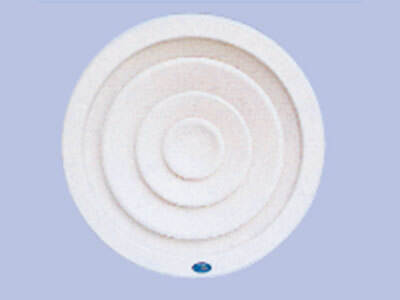
HVAC Vent Diffuser Fundamentals: Airflow Control and IAQ Impact
How diffuser type and throw pattern influence air mixing, stratification, and contaminant dilution
Choosing the right HVAC vent diffusers makes a big difference in how well air circulates indoors because of something called throw patterns these are basically where the air goes and how fast it slows down. Square shaped diffusers tend to spread air out in all directions which helps mix things horizontally across a room. Linear slots work differently they send air further distances making them good for longer spaces. When throw patterns don't match what's needed problems happen. If air moves too fast or points the wrong way, warm stuff collects near the ceiling while bad stuff like carbon dioxide, volatile organic compounds, and germs hang around at breathing level about a meter or so off the ground. Getting the throw just right takes advantage of what engineers call the Coanda effect, where air sticks to surfaces like ceilings instead of dropping straight down. This helps clean out contaminants more evenly throughout the space. Systems installed under floors show this works really well, removing up to 40 percent more pollutants in crowded areas simply because they follow nature's own way of moving air around rather than fighting against it with those old fashioned overhead vents that often miss their mark.
Laminar vs. turbulent airflow: Why low-velocity, uniform delivery reduces CO hotspots and improves breathing zone quality
Laminar airflow works when air moves in straight lines at very slow speeds (less than 0.25 meters per second). This kind of airflow reduces turbulence that normally stirs up pollutants right where people breathe. Turbulent systems are different though they create all sorts of random swirls that pick up settled allergens and spread around carbon dioxide throughout a space. Studies indicate that special diffusers designed for laminar flow can cut down on vertical CO2 levels by as much as half in classroom settings. This matters because high CO2 concentrations above 1,000 parts per million have been linked to problems with concentration and cognitive function. How does it work? Basically, fresh air flows steadily through the room pushing out dirty air towards vents without stirring up dust or other particles again. When air speed stays under 0.15 meters per second near where people sit or stand, we get what's called "still air" conditions. In these situations, tiny droplets from breathing actually fall to surfaces three times quicker compared to spaces with turbulent airflow patterns. This makes laminar systems particularly valuable in hospitals and clinics where reducing infection transmission between patients is critical.
Smart HVAC Vent Diffuser Integration for Dynamic IAQ Optimization
Adaptive diffusers with occupancy sensing and real-time feedback loops
Adaptive diffusers combine infrared sensors or motion detectors with real time air quality monitoring for CO2 and PM2.5 particles, creating what's known as closed loop ventilation systems. The smart tech inside these devices adjusts damper settings and controls where air flows based on whether people are actually present in a room and how pollution levels change throughout the day. This means no one needs to manually adjust anything anymore, and it stops fresh air from being wasted in empty spaces. Real world tests show buildings can save around 30% on energy costs when using these systems instead of old fashioned fixed rate ventilation, all while keeping indoor air quality at safe levels. When conditions shift suddenly, these systems kick in fast to clear out stale spots in the air, keep breathable air clean near where people sit or stand, and reduce those annoying cold drafts we've all experienced before.
Case evidence: ASHRAE RP-1732 data showing 37% reduction in vertical CO stratification using ceiling-mounted low-velocity HVAC vent diffusers
The ASHRAE Research Project RP-1732 showed that using low velocity ceiling diffusers makes a big difference in how air moves around offices. When looking at carbon dioxide levels across different heights in rooms, researchers saw about 37 percent less vertical separation compared to regular high speed vents. What's happening here? The air flows smoothly in layers rather than mixing aggressively, which pushes out the CO2 rich air upwards without kicking up dust or other settled stuff. This keeps the air people actually breathe under 800 parts per million mark. Another important finding was that these systems got rid of contaminants better too, improving performance by roughly 41%. Tests proved that when air moves slower than 0.25 meters per second, it stops both heat stratification issues and the problem where fresh air just gets wasted instead of properly cleaning the space.
Targeted Airborne Pollutant Reduction Through HVAC Vent Diffuser Design
Displacement ventilation with low-turbulence HVAC vent diffusers suppresses resuspension of mold spores and allergens in high-risk spaces
The principle behind displacement ventilation is actually pretty simple physics stuff. Cool, clean air comes in from the floor through those special diffusers that don't create much turbulence, while the warm, dirty air just naturally rises up towards the ceiling vents. This kind of vertical movement really cuts down on all that annoying horizontal air movement we see in regular systems. Studies have shown it can reduce particle resuspension by about 60 something percent compared to old fashioned mixing methods. When looking at healthcare environments, especially places like hospitals where they need to keep mold spores under 500 CFU per cubic meter according to CDC standards, certain types of diffusers work best. These perforated face models with good induction ratios manage to keep air speeds below 0.25 meters per second, which prevents that harsh sandblasting effect from fast moving air jets. We've seen this system put into practice in asthma wards and research laboratories across the country. What makes it so effective? It keeps allergens below 10 micrograms per cubic meter right where people breathe, using controlled displacement instead of relying on turbulent air mixing like traditional approaches do.
Evidence-Based Ventilation Design: Selecting and Positioning HVAC Vent Diffusers for Maximum IAQ Benefit
Ceiling vs. floor-level placement: Performance trade-offs in residential and healthcare settings
How we place air diffusers has a big impact on indoor air quality, and where they go really matters depending on what kind of building we're talking about. For homes, putting diffusers in the ceiling works best because it spreads air evenly throughout the space. This setup helps keep temperatures consistent from floor to ceiling and actually cuts down on energy usage by around 18 percent since the air mixes better. The height also means furniture doesn't block them, so conditioned air can flow down properly. Things look different in hospitals though. Many medical facilities prefer floor level ventilation systems, particularly in those special isolation rooms. Clean air comes in near people's ankles at speeds below 0.2 meters per second, creating this sort of protective air column that keeps contaminants contained. While this method does cut pathogen spread by about 30%, there's a downside too. Heating becomes less efficient by roughly 12% because of how warm air naturally rises. Designers need to balance all these factors when planning spaces. They have to think about how many people will be in a room, what activities happen there, and most importantly for healthcare settings, how serious the infection control needs are before deciding on the right ventilation strategy.
FAQs
What is the role of HVAC vent diffusers in air quality?
HVAC vent diffusers play a crucial role in distributing air throughout a room. They help to control airflow patterns, which can affect the mixing, stratification, and dilution of air contaminants, thus impacting indoor air quality (IAQ).
How do laminar and turbulent airflows differ in HVAC systems?
Laminar airflow moves in straight lines at low velocity, reducing turbulence and the resuspension of particles. Turbulent airflow, on the other hand, creates random swirls that can redistribute settled pollutants.
What benefits do adaptive diffusers provide?
Adaptive diffusers adjust airflow based on real-time data such as occupancy and air quality, enhancing energy efficiency and indoor air quality by providing demand-based ventilation.
What is displacement ventilation?
Displacement ventilation introduces clean air at floor level, which naturally displaces warmer, contaminated air upward, reducing horizontal air movement and the resuspension of pollutants.
Table of Contents
- HVAC Vent Diffuser Fundamentals: Airflow Control and IAQ Impact
- Smart HVAC Vent Diffuser Integration for Dynamic IAQ Optimization
- Targeted Airborne Pollutant Reduction Through HVAC Vent Diffuser Design
- Evidence-Based Ventilation Design: Selecting and Positioning HVAC Vent Diffusers for Maximum IAQ Benefit
- FAQs