
 EN
EN
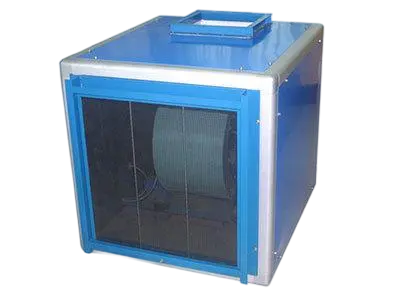
Acoustic Engineering: How Cabinet Centrifugal Fans Achieve Low-Noise Ventilation
Integrated Acoustic Enclosure and Passive Damping Materials
Cabinet centrifugal fans tackle noise problems right at the source by incorporating layered enclosures made from special composite materials. The design typically features dense fibrous cores covered with molded polymer layers that work together to block unwanted sounds. What happens here is pretty clever acoustic science really the mismatch between different material properties actually helps eat away at vibrations before they turn into audible noise. For those pesky mid-range frequencies between 500 and 2000 Hz, manufacturers apply passive damping treatments across key points. These treatments basically transform movement energy into heat through something called viscoelastic deformation. When installed properly around motor mounts and near impeller cutwaters, this setup can cut down structural noise by almost half without messing with how well the system stays cool. Such an integrated noise control strategy lets these fans run quietly under 45 decibels even in places where silence matters most like research labs or hospital recovery rooms, which meets World Health Organization standards for patient comfort areas.
Inlet/Outlet Flow Conditioning with Straightening Grills and Diffusers
The noise caused by turbulence gets significantly reduced when we apply proper aerodynamic flow conditioning both at the intake and exhaust points. Those honeycomb shaped straightening grids work wonders at removing any swirling motion from incoming air, so what reaches the impeller is nice smooth laminar flow at just the right angles. Further along the system, those tapered diffusers slowly widen out the duct area, which brings down air speed somewhere between 15% to 30% without losing too much pressure in the process. This careful slowing down helps keep the airflow attached to surfaces instead of separating off, which would create all sorts of unwanted broad spectrum noise. Real world tests have demonstrated something interesting too: combining these design elements with backward curved blades actually knocks down those annoying blade passing frequency harmonics by around 9 to 12 decibels specifically in that 63 to 250 Hz range where our ears tend to pick up on those deep rumbling sounds most easily.
Aerodynamic Design: Blade Geometry and Impeller Optimization for Quiet Operation
Backward-Inclined Impellers vs. Forward-Curved Blades: Noise, Efficiency, and Stability
Cabinet centrifugal fans equipped with backward-inclined impellers tend to run quieter while achieving better overall efficiency. The blades on these impellers are set at an angle opposite their direction of rotation, which cuts down on turbulence and keeps efficiencies above 85% according to what ASHRAE reported back in 2023. What makes this design so effective is how it stops airflow from separating within the system, cutting down on those annoying broadband noises by around 6 to 8 decibels when compared against forward-curved models. Now, don't get me wrong - forward curved blades do create more static pressure at slower speeds. But there's a tradeoff here. These designs have much smaller stability ranges that actually make them prone to surging noises. Plus, peak efficiency drops somewhere between 15% and 20%, not to mention increased vortex shedding problems because of their curved shape. Backward-inclined impellers behave differently though. They maintain their low noise levels even when duct pressures fluctuate, which is why many ventilation system designers prefer them whenever acoustic performance matters most.
Blade-Passing Frequency Management to Suppress Low-Frequency Tonal Noise
Tonal noise at blade-passing frequencies (BPF)—typically 100–500 Hz—is mitigated through deliberate impeller design. Uneven blade spacing disrupts harmonic pressure pulses, converting distinct tones into broadband noise that is 12–15 dBA quieter, per NIOSH 2022 findings. Computational Fluid Dynamics (CFD) guides optimization of three key parameters:
| Design Factor | Noise Reduction Mechanism | Impact on BPF |
|---|---|---|
| Prime blade count | Scatters acoustic energy | Eliminates pure tones |
| Skewed leading edges | Phased pressure fluctuations | Smoothens spectrum |
| Controlled tip clearance | Reduces vortex intensity | Lowers amplitude by 40% |
These techniques specifically target the 63–250 Hz octave bands—the most perceptible range for mechanical hum—enhancing occupant comfort without sacrificing airflow integrity.
Real-World Validation: Measured Noise Performance of Cabinet Centrifugal Fans
dBA Comparisons in Offices, Cleanrooms, and Healthcare Facilities
Field tests show that modern cabinet centrifugal fans run around 45 to 50 dB(A) in typical office settings, which represents about a third less noise compared to older axial fan models. When installed in cleanrooms certified by ISO standards, these fans stay below 55 dB(A) levels even when pushing maximum airflow, so there's no annoying background noise disrupting sensitive operations. Hospitals have become especially strict about this, since medical staff need quiet areas for patients to recover properly. The World Health Organization sets specific noise limits for healing environments, and these units regularly hit those targets with readings between 40 and 45 dB(A). Beyond just meeting regulations, the quieter operation actually makes a difference in how people feel in spaces where sound quality matters most.
Installation Best Practices to Preserve Low-Noise Performance
Getting the installation right matters a lot when it comes to keeping those acoustic benefits built into cabinet centrifugal fans. The best practice? Put the units on vibration isolation pads or spring mounts. Otherwise, structure-borne transmission becomes a problem. We've seen cases where neglecting this step actually raises perceived sound levels by about 15 dBA. Also important: leave enough space around inlet and outlet ducts. A good rule of thumb is at least 1.5 times the fan diameter on all sides. This helps prevent turbulence that creates annoying high frequency noises. When setting up new systems, make sure the impeller is perfectly aligned. Even something as small as a 0.1 mm imbalance can lead to that annoying hum we call BPF resonance. For connecting pipes, go with flexible canvas connectors instead of rigid ones. They help block vibration from traveling through the system. After everything's installed, do some sound checks at different operating speeds. Compare readings taken before and after commissioning gives a clearer picture of what works. Industrial facilities that stick to these guidelines tend to see around 30% less noise buildup over time, based on recent ventilation research.
FAQ
What is the primary benefit of using cabinet centrifugal fans?
The primary benefit of cabinet centrifugal fans is their ability to provide low-noise ventilation in environments where quiet operation is crucial, such as research labs and hospital recovery rooms.
How do backward-inclined impellers reduce noise?
Backward-inclined impellers reduce noise by minimizing turbulence and preventing airflow separation within the system, resulting in reduced broadband noise levels compared to forward-curved models.
What is the significance of blade-passing frequency management in these fans?
Blade-passing frequency management involves design techniques that suppress low-frequency tonal noise by disrupting harmonic pressure pulses and ensuring smoother airflow, making operation quieter.
How can installation affect the noise performance of cabinet centrifugal fans?
Improper installation, such as failing to use vibration isolation pads or not allowing enough space around ducts, can increase perceived noise levels. Proper installation helps maintain the acoustic benefits of the fans.