
 EN
EN
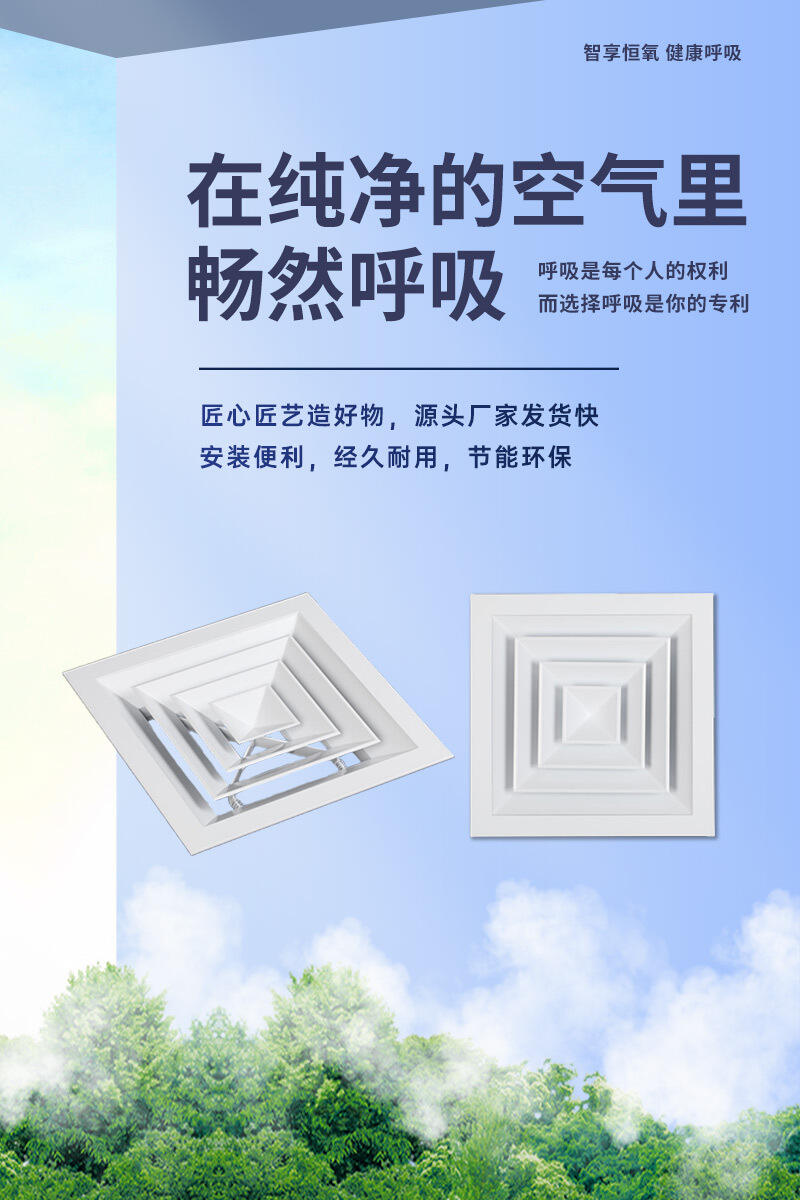
Indoor air quality (IAQ) has become a pivotal concern for commercial buildings, industrial facilities, and residential projects worldwide. As people spend over 90% of their time indoors, poor IAQ can lead to health issues such as respiratory problems, fatigue, and reduced productivity. Among the various components of a ventilation system, the HVAC vent diffuser plays a critical yet often overlooked role. It is not merely a terminal for air distribution but a key determinant of how effectively conditioned air circulates, interacts with the indoor environment, and maintains optimal air quality. Jinan Huifengquan, a professional enterprise focusing on R&D, sales, and customized services of ventilation equipment, emphasizes that selecting the right HVAC vent diffuser is essential for unlocking the full potential of a ventilation system—enhancing efficiency, reducing energy consumption, and safeguarding the well-being of occupants.
1. The Core Role of HVAC Vent Diffusers in Air Distribution
HVAC vent diffusers are designed to regulate the direction, speed, and spread of air emitted from ventilation systems. Unlike ordinary air outlets, high-quality diffusers ensure uniform air distribution across the entire space, eliminating "dead zones" where air stagnates and pollutants accumulate. For instance, in large commercial buildings or industrial facilities, uneven air flow can result in inconsistent temperatures—some areas being too hot while others remain cold—and a buildup of dust, allergens, or harmful gases.
Jinan Huifengquan’s aluminum alloy air outlets and diffusers, crafted with precision engineering, are tailored to address this challenge. Made from durable materials suitable for harsh conditions, these diffusers optimize air velocity to prevent drafts while ensuring every corner of the space receives fresh, conditioned air. The company’s commitment to innovation is reflected in its diffuser designs, which integrate seamlessly with other ventilation equipment such as mixed flow fans and roof fans, creating a synergistic system that maximizes air circulation efficiency. This integration is particularly crucial for industrial settings where large volumes of air need to be exchanged quickly to remove fumes or dust.
2. How the Right Diffuser Enhances Indoor Air Quality
The right HVAC vent diffuser directly contributes to improved IAQ through multiple mechanisms. Firstly, it facilitates effective air exchange by distributing fresh outdoor air evenly, diluting indoor pollutants such as volatile organic compounds (VOCs), carbon dioxide, and airborne bacteria. Jinan Huifengquan’s diffusers, paired with the company’s fully heated fresh air ventilators, ensure that incoming air is not only distributed uniformly but also filtered and conditioned to meet strict quality standards.
Secondly, high-performance diffusers reduce the risk of pollutant recirculation. Poorly designed diffusers may create turbulent air flow that stirs up dust and allergens from surfaces, worsening IAQ. In contrast, Huifengquan’s diffusers are engineered with aerodynamic principles to maintain stable air flow, minimizing turbulence and keeping pollutants suspended long enough to be filtered out by the ventilation system. This is especially important for healthcare facilities, schools, and residential buildings where sensitive groups such as children, the elderly, or individuals with allergies reside.
Additionally, the right diffuser supports energy efficiency, which indirectly benefits IAQ. By optimizing air distribution, the ventilation system operates more efficiently, reducing energy consumption by up to 40% as noted in industry research. Jinan Huifengquan’s diffusers, compatible with the company’s energy-saving centrifugal smoke exhaust fans and low-noise cabinet fans, help create a system that balances performance with sustainability—lowering operational costs while maintaining consistent IAQ.
3. Key Considerations When Selecting HVAC Vent Diffusers
Choosing the right HVAC vent diffuser requires a comprehensive assessment of several factors to align with specific project needs.
Material Quality
The material of the diffuser impacts durability, performance, and safety. Jinan Huifengquan’s aluminum alloy diffusers are corrosion-resistant, fire-retardant, and suitable for harsh industrial environments or humid residential spaces. Unlike low-quality plastic diffusers that may degrade over time and release toxins, aluminum alloy diffusers maintain structural integrity and comply with environmental standards such as ISO14001.
Design and Customization
Every space has unique layout and air flow requirements. Customized diffuser designs ensure optimal performance in complex systems—whether it’s a high-ceilinged industrial warehouse or a compact office. Jinan Huifengquan offers tailored solutions, leveraging its team of professional engineers and multiple utility model patents to design diffusers that fit specific space dimensions, air volume demands, and aesthetic preferences. For example, diffusers for commercial places like shopping malls may feature a sleek design that blends with interior decor, while industrial diffusers prioritize high air flow capacity and resistance to wear.
Compatibility with Other Ventilation Equipment
A diffuser’s effectiveness depends on its compatibility with other components of the ventilation system, such as fans, regulating valves, and fire dampers. Jinan Huifengquan’s complete product line—including mixed flow ventilation fans, fire dampers with CCCF certification, and mufflers—ensures seamless integration. The company’s fan performance testing laboratory conducts rigorous checks to verify that diffusers work in harmony with other equipment, maximizing system efficiency and IAQ. For instance, pairing a diffuser with a low-noise cabinet fan reduces operational noise (as low as 25dB in some cases) while maintaining consistent air flow.
4. Synergy with Comprehensive Ventilation Solutions
Selecting the right HVAC vent diffuser is just one part of achieving superior IAQ. It must be part of a comprehensive ventilation system that includes high-quality fans, filters, dampers, and control mechanisms. Jinan Huifengquan, with its 30,000-square-meter production workshop, 200+ sets of intelligent production equipment, and 16 assembly lines, delivers end-to-end solutions tailored to diverse project needs.
For example, in the Sichuan - Shudao Group’s river - side highway tunnel project, Jinan Huifengquan’s diffusers were integrated with centrifugal smoke exhaust fans and fire dampers to ensure uniform air distribution and rapid smoke extraction in case of emergencies. This synergy not only meets NFPA/BS 9999 compliance standards but also protects lives and property. The company’s ISO9001 quality system certification and OHSAS18001 occupational health and safety management system certification further guarantee that every component—including diffusers—meets the highest industry standards.
Conclusion
In conclusion, the HVAC vent diffuser is a critical component that directly influences indoor air quality, energy efficiency, and occupant comfort. Choosing the right diffuser—one that is durable, well - designed, and compatible with the overall ventilation system—can transform the indoor environment of commercial, industrial, and residential spaces. Jinan Huifengquan, with its expertise in ventilation equipment R&D, customized services, and a complete range of high - quality products, stands as a reliable partner for projects seeking to optimize IAQ. By prioritizing the selection of the right HVAC vent diffuser and integrating it with a comprehensive ventilation solution, businesses and homeowners can create healthier, more efficient, and more comfortable indoor spaces for everyone.