
 EN
EN
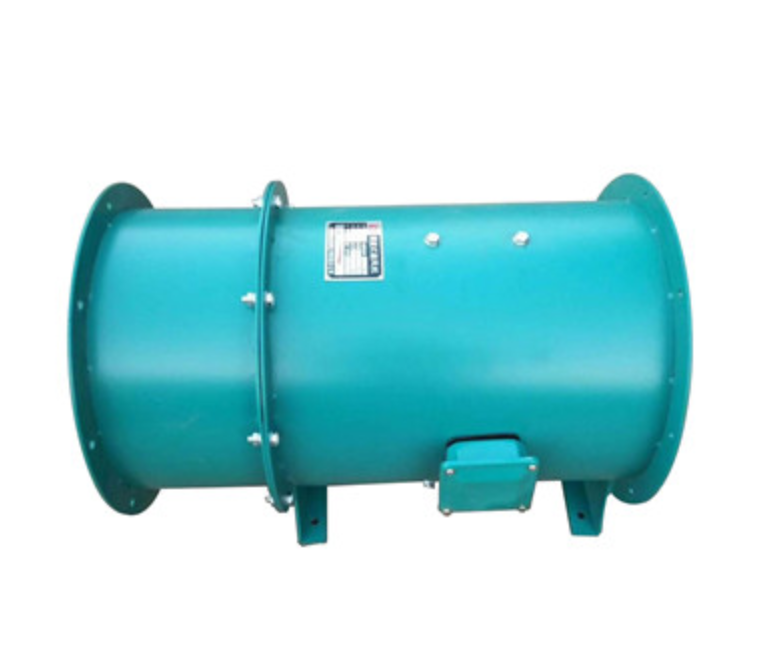
What Is a Mixed Flow Fan? Core Aerodynamics and Industrial Fit
Hybrid Design: How Mixed Flow Fans Combine Axial and Centrifugal Principles
Mixed flow fans combine elements of both axial and centrifugal airflow using specially designed impeller blades at unique angles. When air comes in along the axis, it gets redirected radially, creating a spiral motion. This results in better static pressure compared to regular axial fans, yet still moves a good amount of air overall. One big advantage is that these fans don't need the belt drives commonly seen in older centrifugal models. According to the ASHRAE Handbook on HVAC Applications from 2023, this design can cut down maintenance expenses anywhere between 30% to almost half. Plus, their compact housings are typically made with materials that resist corrosion. These housings also have carefully shaped curves that help reduce turbulence and keep energy losses to a minimum during operation.
Why This Balance Makes Mixed Flow Fans Ideal for Demanding Industrial Ventilation
The aerodynamic compromise delivers critical advantages for industrial settings:
- Pressure versatility: Handles 150–630 Pa static pressure across duct networks
- Space efficiency: 40% smaller footprint than equivalent centrifugal units
- Load adaptability: Maintains stable airflow despite filter clogging or duct resistance
This performance profile makes mixed flow technology particularly effective in chemical plants and manufacturing facilities where space constraints, corrosive fumes, and variable ventilation demands coexist. Their ability to sustain airflow under rising system pressure—validated in EU pharmaceutical plant retrofits—prevents hazardous fume accumulation during production peaks.
Key Advantages of Mixed Flow Fans in Real-World Industrial Ventilation
Higher Static Pressure Than Axial Fans—Without Centrifugal-Sized Footprint
Mixed flow fans can generate anywhere between 30 to 50 percent more static pressure compared to standard axial fans, all while taking up much less space. This is really important for factories and warehouses where every square foot counts. What makes these fans work so well is their special impeller design that combines both the speed characteristics of axial fans with the pressure capabilities of radial fans. This allows air to move efficiently even through complicated duct systems that would challenge other fan types. Traditional centrifugal fans need lots of floor space and often require major installation work, but mixed flow units simply fit right into existing ducts. For manufacturing facilities looking to save space without compromising on airflow, this efficiency ratio is a game changer. According to industry reports from the U.S. Department of Energy published in 2022, companies have been able to cut down their mechanical room sizes by around 40% after making the switch from centrifugal to mixed flow technology, and still maintain the same level of ventilation performance they needed.
Energy Efficiency Gains with EC Motor Integration Across Variable Loads
Putting together EC (Electronically Commutated) motors and mixed flow tech can cut energy costs by as much as 55% when compared to old school AC powered fans according to Greenheck's research from 2023 on mixed flow fan performance. These EC motors have this neat feature where they adjust their speed based on what the system actually needs at any given moment, so no wasted electricity when things aren't running at full blast. And when we pair these smart motors with those specially designed mixed flow impellers that move air more efficiently, the whole system drinks way less power throughout all those production runs. Factories that run non stop day after day? They're looking at saving tens of thousands each year on their electric bills without sacrificing control over temperature and air quality in their facilities.
Compact Inline Installation: Solving Space Constraints in Retrofit Projects
Mixed flow fans come in a cylinder shape that lets them fit right into existing ductwork, making ventilation improvements much easier for older buildings. Axial fans need long straight ducts, while centrifugal ones require extra space around them. But these new fans just slip between existing duct sections with hardly any room needed at all. According to a survey by ASHRAE's Technical Committee 5.12 from last year, this approach avoids major structural changes in about four out of five retrofits. Factories that are getting on in years often struggle with tight spaces anyway. These fans solve problems caused by low ceilings or crowded mechanical rooms where there simply isn't enough breathing room. Plus, since they're so light weight, workers can hang them overhead without worrying about reinforcing the structure below.
Proven Performance and Reliability of Mixed Flow Fans in Harsh Environments
Corrosion-Resistant Construction for Chemical, Food, and Pharmaceutical Facilities
Mixed flow fans come equipped with stainless steel casings and special composite coatings designed to handle harsh conditions found in many industrial settings. These include aggressive chemicals, high humidity from regular cleaning, and extreme pH levels that would normally damage standard equipment. The result? Less chance of microbes growing on surfaces and materials breaking down over time, plus better air circulation that keeps things clean. Maintenance teams in pharmaceutical facilities typically save around 40 percent on upkeep costs when switching from regular fans to these coated versions. Meatpacking operations have seen their replacement schedules stretch out about twice as long when they install these corrosion resistant units instead of cheaper alternatives. After all, these fans need to survive constant exposure to acid fumes and daily disinfection routines. Plus, the tight seals stop dust and other particles from getting inside, which helps food processors meet those strict HACCP requirements for safety control points.
Stable Flow Delivery Across Complex Duct Networks: Field Validation from EU Sites
Studies done at various manufacturing sites throughout Europe show that mixed flow fans maintain about plus or minus 3% airflow consistency even when installed in complex duct systems with multiple branches and several right angle bends. These fans don't suffer from the same problems as axial units that tend to stall when faced with backpressure. They actually manage to hit around 85% energy transfer efficiency even when filters get dirty or change load conditions something really important for keeping proper fume extraction in those automotive paint shops where workers need clean air. Take one chemical processing facility for instance they had persistent hot spot problems until they upgraded their old 300 meter long duct system. Now they get steady CFM readings even though there are still pressure fluctuations reaching up to 500 Pa static pressure. The reason behind this kind of performance? Well, it all comes down to how these fans are designed. Their impellers have been engineered with special aerodynamic features that take what would normally be chaotic incoming air and turn it into smooth, steady output without those annoying pulsations that plague other fan types.
How Mixed Flow Fans Compare to Alternatives: A Data-Driven Ventilation Choice
Industrial ventilation choices often come down to picking between mixed flow fans and their traditional counterparts like axial or centrifugal models. Axial fans are great for moving large volumes of air but start to lose effectiveness once static pressure hits around 300 Pa. Centrifugal fans can handle much higher pressures but need plenty of room to install properly. That's where mixed flow fans shine. These units manage static pressures over 1,000 Pa despite being compact enough to fit into tight spaces, which makes them perfect when upgrading older buildings that don't have much available area. Looking at energy consumption adds another layer to the decision. Tests show these mixed flow units use about half as much electricity compared to forward curved centrifugal fans during normal operating conditions according to Greenheck's research from last year on fan performance. Basically, they combine the best aspects of both worlds: the pressure handling capability of centrifugal systems with the space saving benefits of axial fans, so they work really well in ductwork setups where maintaining proper airflow balance matters without burning through extra power.
FAQ Section
What are mixed flow fans?
Mixed flow fans are a type of fan that combines elements of both axial and centrifugal airflow to provide better static pressure and airflow efficiency.
Where are mixed flow fans typically used?
These fans are ideal for demanding industrial environments such as chemical plants, manufacturing facilities, and other settings where space constraints, corrosive fumes, and variable ventilation demands coexist.
How do mixed flow fans compare to axial and centrifugal fans?
Mixed flow fans generate more static pressure compared to axial fans and fit into tighter spaces compared to centrifugal fans, making them a versatile choice for ventilation needs.