
 EN
EN
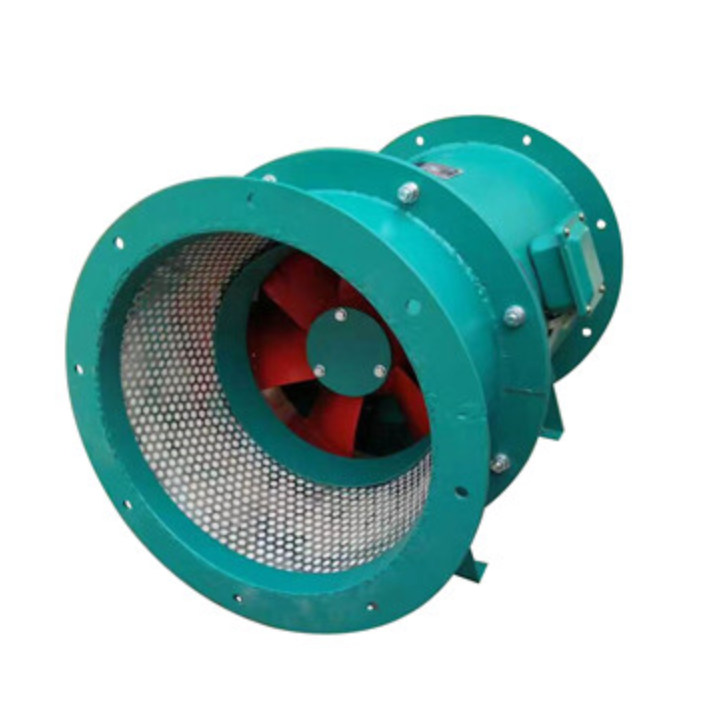
What Is a Mixed Flow Fan? Core Design and Operating Principle
Mixed flow fans are basically a smart mix between regular axial fans and centrifugal models, combining what works best from both worlds. The secret lies in their specially designed blades that push air at an angle somewhere between straight ahead and sideways usually around 30 to 60 degrees off center. This unique design lets them create good pressure while still moving plenty of air volume all at once. More and more factory managers are turning to these fans when they need equipment that can handle resistance from ductwork but still deliver enough airflow without taking up too much space. They're especially handy in tight industrial spaces where traditional fans just don't fit or perform well enough.
How Mixed Flow Fans Combine Axial and Centrifugal Dynamics
What makes these impellers special is all about their blade shape. Traditional axial fans move air straight along the shaft, while centrifugal models send it outwards in a circle. Mixed flow impellers do something different though they twist the air into a spiral as they spin around. This diagonal movement gets the best of both worlds using axial motion for airflow volume and centrifugal forces to build pressure, resulting in a nice balance between power and efficiency. Top companies report efficiencies that are anywhere from 15 to maybe even 30 percent better than regular fans because they carefully design the blades to cut down on turbulence. They use something called Computational Fluid Dynamics, or CFD for short, to fine tune exactly how air moves through these systems and minimize wasted energy in the process.
Key Structural Features Enabling Balanced Pressure–Flow Performance (6"–10" wg)
Three design elements enable this hybrid operation:
- Tapered housing profiles accelerate air progressively, maintaining velocity without backpressure
- Forward-curved blades with compound angles optimize lift-to-drag ratios
- Low-clearance tolerances (<0.5 mm) between impeller and casing prevent leakage
These features allow static pressure delivery of 150–630 Pa (6.0"–25.3" wg) while moving 220–2,900 m³/h—a range unattainable by purely axial or centrifugal units. Efficiency peaks at 82% in 315 mm models, as validated in ASHRAE fluid dynamics studies. The enclosed motor design further enhances durability in harsh environments.
Top Industrial and Commercial Applications of Mixed Flow Fans
Data Center Exhaust and Smoke Control Systems
Mixed flow fans work really well in data centers because they handle both airflow control and smoke removal so effectively. These fans combine features from different designs to create something special - they produce around 6 to 10 inches of water gauge pressure while still moving large volumes of air. This makes them great at pushing through the resistance found in server room exhaust systems. When there's a fire situation, these fans can clear out smoke fast through specific pathways, which keeps people able to see during evacuations and protects expensive equipment from heat damage. Traditional axial fans tend to struggle when faced with pressure drops, but mixed flow models keep performing reliably even through complicated ductwork arrangements. They maintain steady air changes per hour rates needed for proper cooling throughout the facility. The result? Servers stay cool without drawing as much power as other fan types would require, saving between 15% to 20% on energy costs compared to centrifugal fans over time.
Kitchen Hood Ventilation and Stairwell Pressurization
Mixed flow fans have become essential in commercial kitchen hood exhaust systems where maintaining proper pressure balance is important. These fans work really well at pulling out greasy air through filters and ducts, and they also help fix problems when there's not enough fresh air coming in from outside. The pressure these fans generate isn't too strong either, usually around 6 to 10 inches of water gauge, which happens to be just right for keeping stairwells safe. When fires break out, these fans create positive pressure in the escape routes so smoke doesn't get in, all while staying quiet enough that most people won't even notice them running below 65 decibels. Because they can handle both low and medium pressure needs, restaurant owners and building managers often install just one fan instead of multiple units. This saves space and money while still meeting all the necessary regulations for good air circulation and safety standards across hospitals, office complexes, and tall apartment buildings.
Why Mixed Flow Fans Deliver Superior Energy Efficiency and Low Noise
Measured Efficiency Gains vs. Axial and Centrifugal Alternatives
In moderate static pressure situations around 6 to 10 inches water gauge, mixed flow fans typically offer between 30 and 55 percent better energy efficiency compared to standard axial or centrifugal fan models. The secret lies in their unique blend of aerodynamic features where the impeller moves air diagonally through the system rather than straight on like regular fans do. This diagonal movement cuts down on those annoying turbulence issues and air recirculation problems that plague conventional designs. Plus, when manufacturers optimize the space between the housing and blades, they actually reduce how much energy gets wasted through air leaks. Another big plus point is that these fans can get away with using smaller motors while still moving the same amount of air. That means companies save money initially on equipment costs and also enjoy reduced running expenses over time something not often seen when picking out industrial HVAC systems.
Acoustic Performance in Sensitive Environments (e.g., Offices, Hospitals)
With operational noise levels ranging from 31–65 dB, mixed flow fans are well-suited for acoustically sensitive settings. Precision-balanced impellers eliminate mechanical vibration, while aerodynamically profiled blades reduce pressure fluctuations—the primary source of fan-generated sound. In hospitals and offices, this translates to:
- Consistent, quiet airflow without disruptive hum
- Compliance with strict acoustic standards (e.g., <65 dB for patient rooms per ASHRAE)
- Enhanced occupant comfort during extended, uninterrupted operation cycles
FAQ Section
Below are some frequently asked questions about mixed flow fans.
- What are mixed flow fans used for? Mixed flow fans are used both in industrial and commercial applications such as data center exhaust, kitchen hood ventilation, and stairwell pressurization.
- How do mixed flow fans contribute to energy efficiency? Mixed flow fans offer better energy efficiency by reducing turbulence and optimizing space between housing and blades, which minimizes energy wastage through leaks.
- Are mixed flow fans noisy? These fans are designed to be quiet, with operational noise levels ranging between 31–65 dB, making them suitable for acoustically sensitive environments.
- How do mixed flow fans improve airflow? The diagonal impeller movement cuts down on air recirculation problems, thus effectively enhancing airflow efficiency.