
 EN
EN
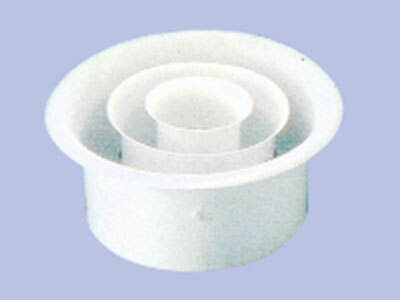
How Swirl Diffusers Enable Uniform Air Distribution and Full-Corner Coverage
Swirl Pattern Physics: Breaking Jet Flow Limitations with Controlled Turbulence
Standard air diffusers tend to shoot out strong jets of air, which can cause hot spots in some areas and chilly drafts elsewhere. Swirl diffusers fix this problem by using specially positioned vanes that twist the airflow instead of letting it blast straight ahead. The spinning motion spreads the air movement outward in all directions rather than pushing it forward like a rocket engine. According to research published last year in the HVAC Optimization Journal, these swirling patterns mix air about 40 percent quicker compared to regular jet systems. What does this mean practically? Better temperature control throughout spaces, fewer complaints about drafty corners, and overall improved comfort levels for building occupants.
- Draft velocities consistently below the ASHRAE-recommended 0.15 m/s threshold in occupied zones
- Temperature differentials under 1.5°C across seating and standing areas
- Effective elimination of stagnant corners via centrifugal dispersion
Coanda Effect Amplification: Radial Vortex Formation for Wall Adhesion and Lateral Spread
Swirl diffusers boost the Coanda effect, which is basically when air naturally sticks to nearby surfaces, because they create those stable spinning vortices. The swirling air creates these low pressure areas on walls and ceilings that actually push air sideways along those surfaces. This means the air reaches those hard to get corners where regular rectangular or straight diffusers just can't go. What makes this work so well is that these vortices stay stable even when the air isn't coming out super fast. That prevents the air from peeling away too early and losing effectiveness. According to research from ASHRAE's project number 1724 back in 2023, these swirl diffusers stick to walls about 4 times better than standard slot diffusers. This improved sticking power translates to better coverage around room perimeters and more even heat distribution without needing extra power from fans.
Optimizing Swirl Diffuser Selection by Building Type and Occupancy Demand
Healthcare and Education: Prioritizing Draft-Free, Uniform Temperature with Low-Turbulence Swirl Diffusers
When it comes to places like hospitals and schools, people feel better when they're not dealing with temperature swings or uncomfortable drafts. That's where low turbulence swirl diffusers come into play. These devices spread air gently in all directions, keeping temperatures consistent across rooms while avoiding those annoying speed changes we sometimes notice. Hospitals benefit because patients don't get chilled near their beds anymore, which helps them recover faster and lowers the risk of infections caused by stagnant air pockets. Classrooms see similar benefits too - no more spots where it's either freezing or sweltering, so students can actually focus on what they need to learn. The way these systems work relies on something called the Coanda effect, basically making sure air sticks to walls and ceilings properly so every corner gets fresh air circulation without leaving any areas untouched where germs might hang around. Specialized versions for extremely sensitive spaces such as NICUs or cleanrooms integrate HEPA filters alongside controlled airflow patterns at under 0.25 meters per second turbulence levels, ensuring both clean air quality standards are met and occupants remain comfortable throughout their stay.
Commercial Offices and Retrofit Projects: Matching Swirl Angle, Throw Distance, and Static Pressure Drop to Room Geometry
Picking out the correct swirl diffuser for commercial buildings means finding a balance between how air moves and what the building actually looks like. For those open office spaces where ceilings sit around 2.7 to 3.5 meters high, diffusers with swirl angles between 35 and 45 degrees work best. They send air far enough across the room without causing short circuits, yet keep airflow speeds down to less than 0.8 meters per second at desk height. Things get trickier when dealing with older buildings needing upgrades. The old duct systems usually need diffusers that don't create too much resistance (below 15 Pascals is ideal) so the existing fans aren't pushed beyond their limits. Real world factors matter too. Columns in the space might need diffusers that throw air unevenly. Lighting along walls affects how air clings to surfaces. And different partition heights change how well air mixes vertically through the space. Get all this right and the results speak for themselves. Temperature differences from floor to ceiling drop below 1 degree Celsius. Energy savings for heating and cooling systems typically hit between 18 and 22 percent over regular diffusers. We've seen this play out time and again in actual retrofit projects across various industries.
Quantifying Swirl Diffuser Efficiency: Induction Ratio, Mixing Performance, and Thermal Comfort
Beyond Induction: Why High Induction Alone Doesn’t Guarantee Comfort — The Role of Velocity Decay and Plume Stability
High induction ratios definitely help mix air better, but thermal comfort really comes down to how predictably the air speed drops off and whether those air streams stay stable. The speed drop refers basically to how fast supply air slows down after leaving the diffuser. We need to keep these speeds under about 0.15 meters per second where people actually work and live. If not, folks get uncomfortable around 30% more often according to some tests done in controlled environments. When plumes become unstable too, they create all sorts of problems with turbulence and wild temperature swings that make people think the air isn't fresh enough. Getting good results means finding the right balance between induction rates and carefully managing those speed drop patterns while keeping the air streams solid and reliable. This ensures everyone stays comfortable without dealing with annoying drafts or constant noise from the system running.
ASHRAE RP-1724 Validation: 4.2— Stronger Coanda Engagement vs. Linear Slot Diffusers Enhances Perimeter Coverage
According to ASHRAE's RP-1724 research, swirl diffusers actually engage the Coanda effect about 4.2 times better than those linear slot models we see so often. What does this mean in practice? Well, it leads to much better wall contact which allows air to spread out more evenly around rooms. The airflow can reach those tricky corner areas where traditional systems struggle, keeping surfaces at consistent temperatures throughout. Buildings of all kinds benefit from this - think hotel lobbies, office spaces, even lab environments. And here's the kicker: we get all these improvements without needing to crank up the fans or sacrifice good indoor air quality. Pretty impressive when you consider how many systems compromise one aspect to gain another.
Installation Best Practices and Common Pitfalls for Maximum Swirl Diffuser Performance
Getting proper installation right starts with following those clearance specs manufacturers recommend. Usually we need about 18 to 24 inches away from walls and around 12 to 18 inches from lights or anything else in the way, according to ASHRAE Guideline 1 plus whatever local codes apply. Before turning anything on, someone needs to check how balanced the airflow is upstream with good quality anemometers. If there's more than a 10% difference in pressure somewhere, things might not distribute evenly and drafts could form. Most problems down the road come from not keeping up with maintenance work. Dust builds up on those vanes over time and can cut airflow efficiency by nearly 30% after just two years of operation. While putting everything together, make sure the ducts line up properly, check that all the gaskets are intact, and seal everything tightly so no air leaks out which would mess with how far it throws across the space. At the end of the job, bring in certified HVAC pros to double check if the system handles static pressure correctly and confirm that all those diffuser vanes actually move freely without getting stuck somehow once installed.
FAQs on Swirl Diffusers
What are swirl diffusers?
Swirl diffusers are specialized air diffusers designed to create a swirling motion of air that enhances uniform air distribution and improves temperature control in a space.
How do swirl diffusers improve air distribution?
Swirl diffusers use specially positioned vanes to twist airflow, spreading air movement outward and evenly across a room, compared to standard diffusers that might cause drafts or uneven temperature.
What is the Coanda effect and how do swirl diffusers amplify it?
The Coanda effect is the tendency of air to adhere to nearby surfaces. Swirl diffusers amplify the Coanda effect by creating spinning vortices that push air sideways along surfaces, enhancing air reach to corners and perimeters.
Where are swirl diffusers commonly used?
Swirl diffusers are commonly used in healthcare and education facilities, commercial offices, and retrofit projects where uniform temperature and air distribution are crucial.
What are best practices for installing swirl diffusers?
Proper installation involves maintaining manufacturer clearance specifications, checking airflow balance with anemometers, and ensuring regular maintenance to avoid dust buildup, which can affect efficiency.
Table of Contents
- How Swirl Diffusers Enable Uniform Air Distribution and Full-Corner Coverage
- Optimizing Swirl Diffuser Selection by Building Type and Occupancy Demand
- Quantifying Swirl Diffuser Efficiency: Induction Ratio, Mixing Performance, and Thermal Comfort
- Installation Best Practices and Common Pitfalls for Maximum Swirl Diffuser Performance
- FAQs on Swirl Diffusers