
 EN
EN
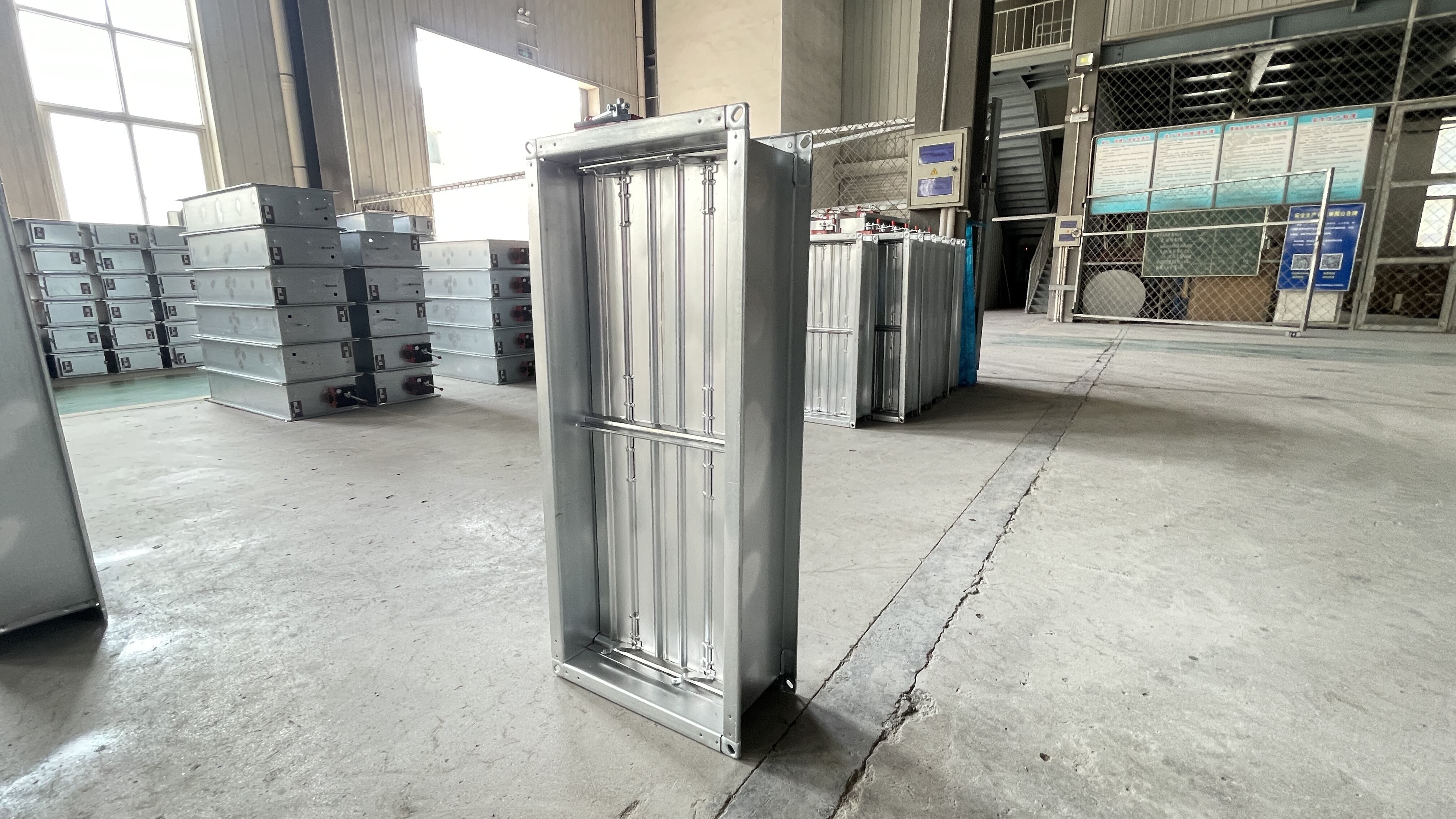
Fire Damper Fundamentals: Purpose, Placement, and Regulatory Necessity
Core Function: Passive Fire Containment Through HVAC Penetration Sealing
Fire dampers are critical passive fire protection devices installed within HVAC ductwork to seal penetrations through fire-rated walls, floors, and ceilings. When exposed to elevated temperatures—typically at 74°C (165°F)—they automatically close via fusible links or thermal actuators, halting the spread of flame and smoke between compartments. This containment preserves structural integrity and maintains tenable escape routes during a fire. Unlike active suppression systems, fire dampers require no power or external control, making them inherently fail-safe components that uphold the foundational fire safety principle of compartmentation.
Why Building Codes Mandate Fire Dampers at Duct Penetrations
Building codes universally require fire dampers at HVAC duct penetrations of fire-rated assemblies because unprotected openings transform ducts into high-risk fire and smoke pathways. Standards such as NFPA 90A (2024) and the UK Building Safety Act 2022 mandate their use to preserve the fire-resistance rating of barriers. Research confirms that unsealed penetrations can reduce compartmentation effectiveness by up to 70% (Fire Safety Journal, 2023). Beyond regulatory compliance, proper damper installation directly supports life safety by limiting fire migration and sustaining safe evacuation conditions—turning potential hazards into engineered, controlled elements of fire strategy.
Fire Damper Types and Their Code-Driven Applications
FD, MFD, and SCD: Functional Differences and When Each Is Required
Fire dampers are classified by function and activation method: standard fire dampers (FD) operate passively via thermal response and are used where ducts penetrate fire-rated walls; motorised fire dampers (MFD) integrate electric actuators for remote shutdown or integration with building management systems (BMS), supporting coordinated emergency sequences; and smoke control dampers (SCD) prioritise smoke containment in corridors, stairwells, and smoke shafts. Selection depends on compartmentation strategy, airflow conditions (static vs. dynamic), and whether the system must operate under fan-on or fan-off fire scenarios.
UK Building Safety Act 2022 and Approved Document B: Impact on Fire Damper Selection
The Building Safety Act 2022 reinforced accountability for passive fire protection, requiring documented justification for all fire damper specifications under the “Golden Thread” framework. Approved Document B now mandates dynamic-rated dampers in high-velocity HVAC systems—where static-rated units fail 67% of closure tests under operational airflow pressure (UL 555:2023). For protected shafts and dedicated smoke control zones, SCDs with BMS integration and real-time status feedback are compulsory. Non-compliance carries significant legal and financial risk, including unlimited fines.
Fire Damper Classifications (E, EI, ES, EIS) and EN 13501-3 Performance Standards
Decoding EN 13501-3 Ratings: Integrity, Insulation, Smoke Control, and Combined Protection
EN 13501-3 is the European benchmark for fire damper performance, defining classifications based on full-scale furnace testing per EN 1366-2. These ratings quantify real-world fire resistance:
- E (Integrity): Prevents flame and hot gas penetration for a specified duration (e.g., E60, E120).
- EI: Adds Insulation, limiting temperature rise on the unexposed side to ≤140°C average—critical for preventing ignition of adjacent materials.
- ES: Integrates Smoke leakage control, restricting flow to <3 m³/h per m² at 25 Pa—vital for protecting escape routes.
- EIS: The highest classification, combining Integrity, Insulation, and Smoke control.
ES and EIS dampers are essential in air handling units serving stairwells and corridors, where smoke inhalation accounts for approximately 70% of fire-related fatalities. Compliance with EN 13501-3 is required under UK law—including the Building Safety Act 2022—and verified through independent third-party certification.
Dynamic Fire Damper Certification: Bridging the Gap Between Lab Tests and Real HVAC Conditions
UL 555 Static vs. Dynamic Testing: Why Airflow Velocity and Pressure Matter for Compliance
UL 555 distinguishes two critical test protocols: static (UL 555S) and dynamic (UL 555D). Static testing—conducted with zero airflow and 0 Pa pressure—fails to replicate real HVAC conditions, where aerodynamic forces from airflow >3 m/s can impede damper closure. Dynamic testing, by contrast, validates performance under realistic duct pressures (250–1,000 Pa) and velocities up to 20 m/s, ensuring reliable sealing during active system operation. Updated codes—including IBC 2023—now require dynamic certification for dampers in fan-on environments, as 73% of field failures occur in high-flow settings (Facilities Safety Report, 2024).
| Test Type | Airflow Simulation | Pressure Range | Real-World Relevance |
|---|---|---|---|
| Static (UL 555S) | None | 0 Pa | Irrelevant for active HVAC systems |
| Dynamic (UL 555D) | Up to 20 m/s | 250–1,000 Pa | Validates performance in actual operating conditions |
The Hidden Risk: Widespread Use of Static-Rated Fire Dampers in High-Velocity Systems
Despite evolving standards, static-rated dampers remain installed in an estimated 40% of modern high-velocity HVAC systems—an unaddressed compliance gap. Audits across 4,700 projects revealed that non-dynamic dampers permitted smoke spread 2.8× faster than certified dynamic alternatives. This discrepancy stems from outdated specifications and cost-driven procurement decisions that overlook UL’s airflow classification requirements. Retrofitting dynamically certified dampers reduces fire containment failures by up to 68% in critical infrastructure—transforming a latent vulnerability into a verified layer of protection.
FAQ
What is the primary function of fire dampers?
Fire dampers act as passive fire protection devices that seal HVAC duct penetrations in fire-rated barriers, preventing flame and smoke spread across compartments.
Why are fire dampers essential in HVAC systems?
Building codes mandate fire dampers to maintain fire resistance within compartments, ensuring evacuation paths remain viable and preventing unsealed ducts from facilitating fire and smoke spread.
How do dynamic fire dampers differ from static ones?
Dynamic fire dampers undergo rigorous testing under real HVAC airflow and pressure conditions, ensuring functionality during active system operations. Static ones lack such testing, making them unsuitable for high-velocity systems.
What do the E, EI, ES, and EIS classifications mean?
These classifications in EN 13501-3 reflect a damper's fire resistance capabilities, including Integrity (E), Insulation (EI), Smoke control (ES), and combined qualities (EIS).
Table of Contents
- Fire Damper Fundamentals: Purpose, Placement, and Regulatory Necessity
- Fire Damper Types and Their Code-Driven Applications
- Fire Damper Classifications (E, EI, ES, EIS) and EN 13501-3 Performance Standards
- Dynamic Fire Damper Certification: Bridging the Gap Between Lab Tests and Real HVAC Conditions